How to Keep a Trading Journal

How to Keep a Trading Journal — featured chart
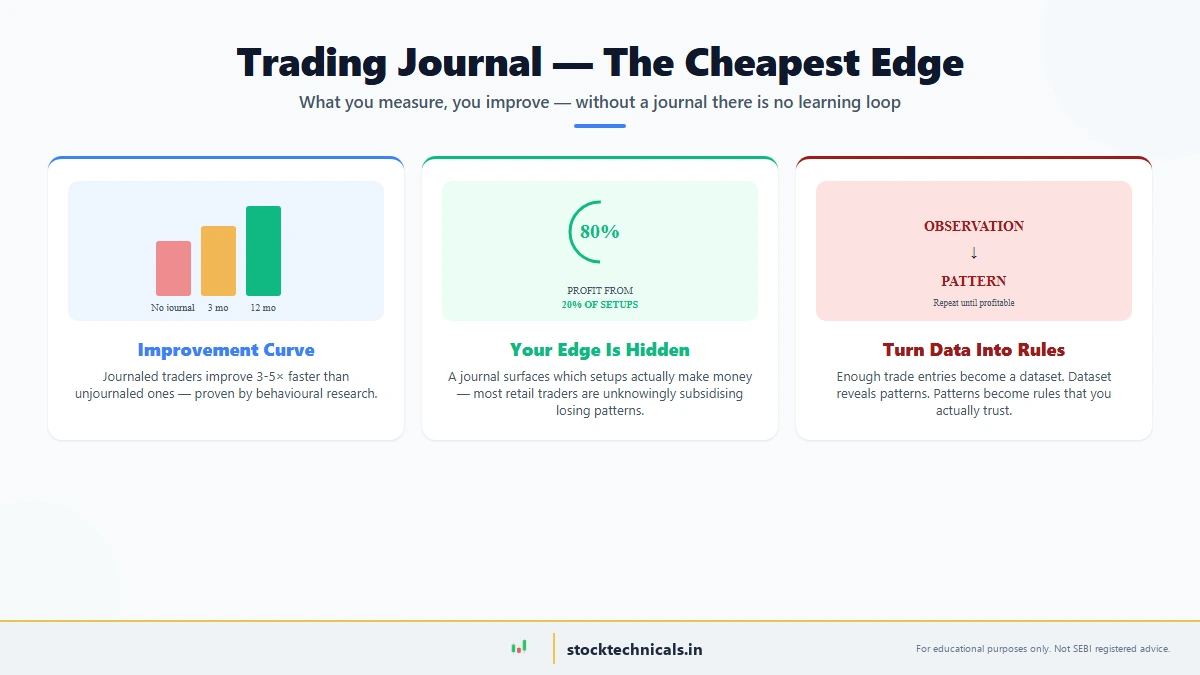
Quick Answer: A trading journal is a structured log of every trade you take — entry, exit, stop loss, rationale, emotion, and outcome. It turns your trading from guesswork into data. Most traders lose for years without realising they repeat the same three mistakes; a journal surfaces them in weeks. Record pre-trade plan, post-trade outcome, … Read more
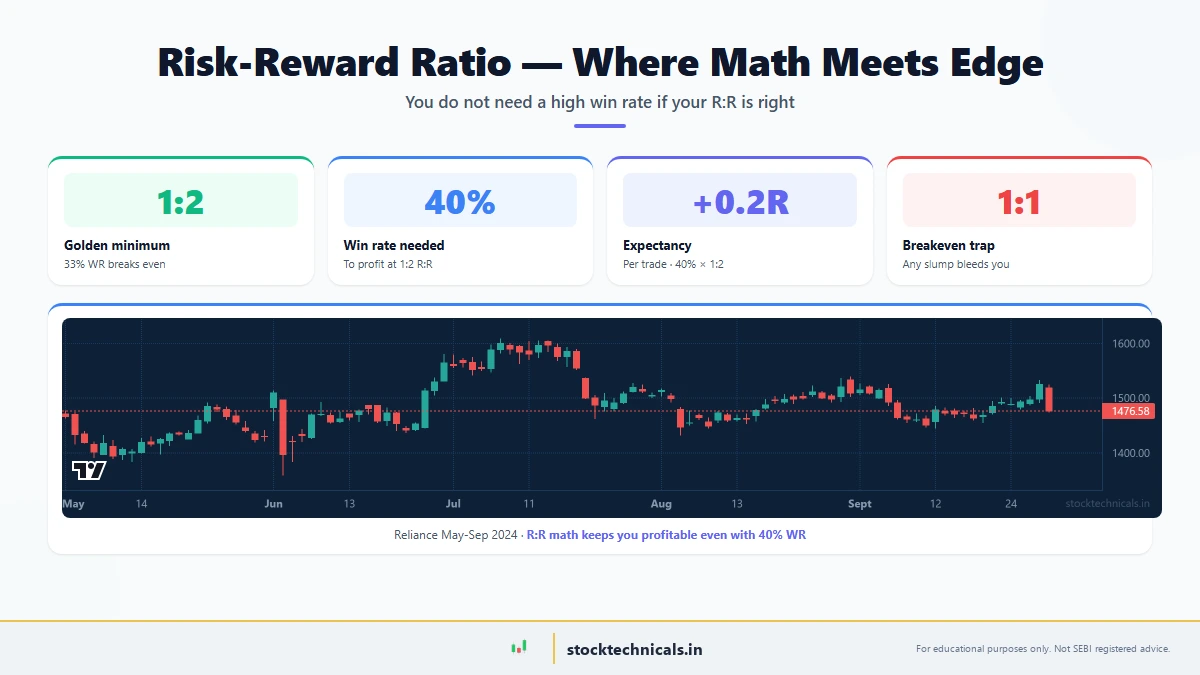
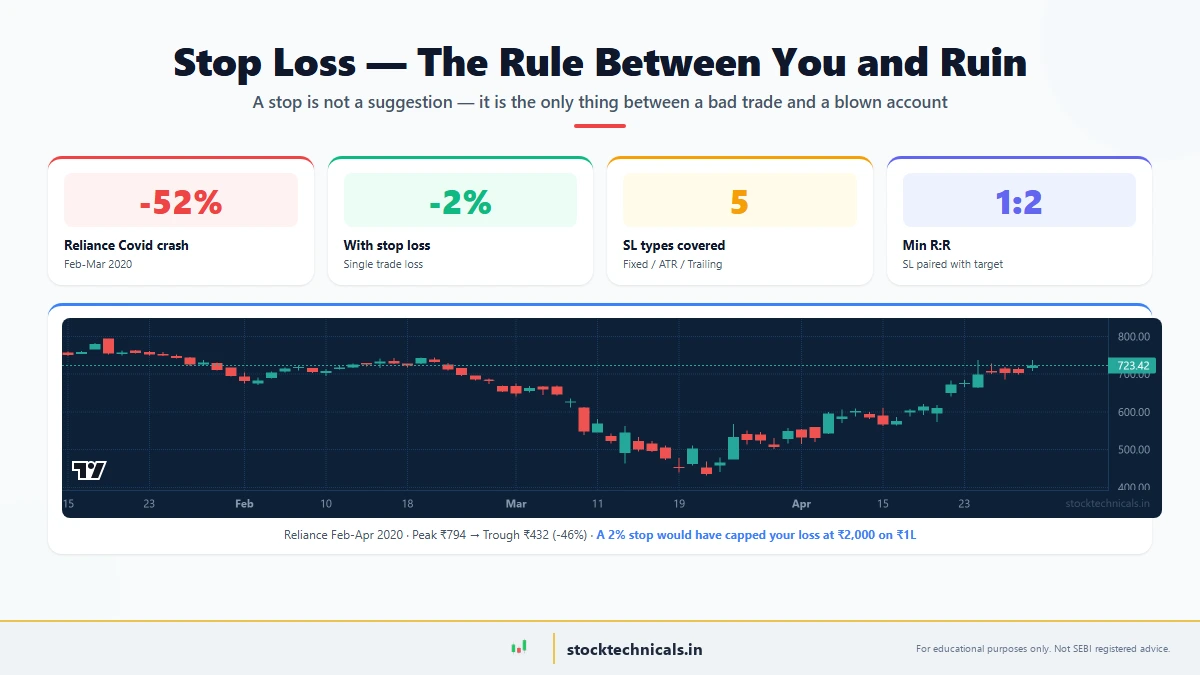
Stop Loss Strategies: Protecting Your Trading Capital

Stop Loss Strategies: Protecting Your Trading Capital — featured chart

Quick Answer: A stop loss is a pre-set exit order that limits your loss on a trade if price moves against you. It must be placed before you enter, based on chart structure — not how much loss you’re comfortable with emotionally. The 5 main strategies: Fixed Percentage, Support-Based, ATR-Based, Trailing, and Hybrid. Published March … Read more

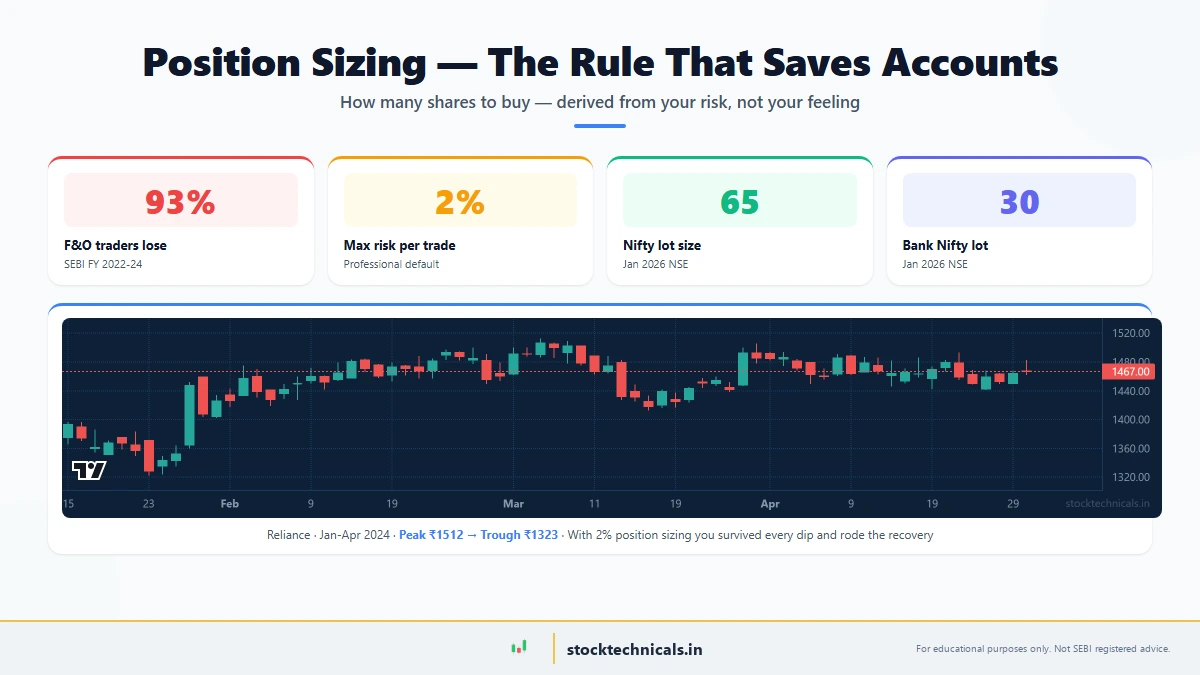
Position Sizing in Trading: How to Calculate the Right Trade Size

Position Sizing in Trading: How to Calculate the Right Trade Size — featured chart

Quick Answer: Position sizing is calculating how many shares or contracts to buy based on your account size, risk tolerance, and stop loss distance. The core formula: Position Size = (Account Value × Risk %) ÷ (Entry Price − Stop Loss Price). Example: ₹2,00,000 account, 1% risk = ₹2,000, stop loss distance ₹40 → buy … Read more

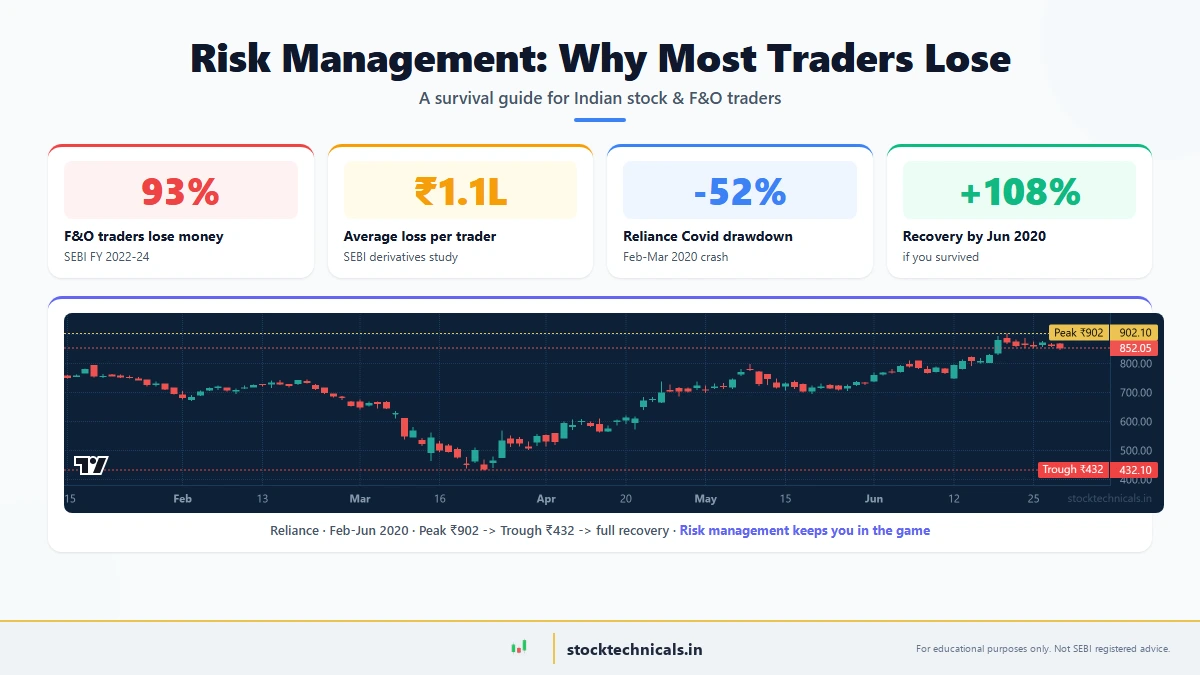
Risk Management in Trading: Why Most Traders Lose and How to Stop

Risk Management in Trading: Why Most Traders Lose and How to Stop — featured chart

Quick Answer: Risk management is a system for deciding how much capital to risk per trade to protect your account from catastrophic losses. The professional standard: never risk more than 1-2% of your total account balance on any single trade. If your account is ₹1,00,000, you risk a maximum ₹1,000-₹2,000 per trade — no exceptions. … Read more